
My dad was in the Coast Guard. He never really talked about it and gave pretty vague answers if we asked about his time serving, so I never thought much about it. I guess I just assumed everyone’s family was like ours — dads served in the military before they had families and that was just part of life.
And for some reason, I also believed all cats were girls and all dogs were boys. That pilots and stewardesses (that’s what we called flight attendants back in the day) were married to each other. And that all doctors (boys) were married to nurses (girls). I have no idea where I came up with these things, but I can tell you my world was absolutely rocked when my belief system came crashing down. I may have only been around ten or so, but I digress …
So apparently, my dad and his brother — my Uncle Lefty — had gotten jobs one summer baling hay. They were from southeast Kansas and joined up with a crew that traveled around working different farms throughout the region. They were supposed to be sending money home (which my dad would continue to do for the rest of his mother’s life), but instead they spent most of it partying. Dad said they basically drank their way down to Texas and ended up stranded with no money and no way to get home.
I guess they called my grandma from Houston asking for bus fare and she gave them the old what-for. She told them they got themselves down there, so they could get themselves back. Somewhere close to where they had called from was a recruitment office, so my dad walked in and signed up. I’m not sure whether Uncle Lefty joined too or went into the Navy instead. Maybe he figured out a better plan. But what I do know is that my dad joined the Coast Guard because, in the famous words of Officer Mayo, “I got nowhere else to go!”
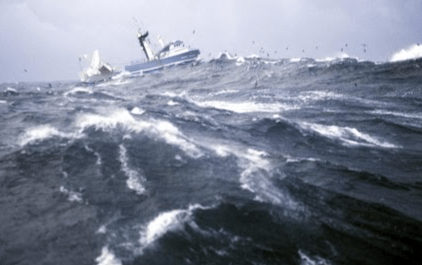
One story I remember him telling was about a wave crashing into the boat he was on and nearly washing him out to sea. I think he either got tangled in a chain or grabbed onto one at the last second and held on for dear life. That’s what saved him.
The other thing I remember was asking what exactly he did in the Coast Guard. He told me they mostly rescued fishermen who got caught too far out and couldn’t make it back. So naturally, in my little-kid mind, I pictured two guys in a tiny rowboat wearing fishing hats and feeling sheepish about getting home late for dinner.
He always downplayed his role in the Coast Guard, joking that the Navy called them “knee-deep sailors” and acting like it wasn’t a big deal. But what I found out later was that he had been stationed in San Francisco and the Bering Strait and had actually done some pretty incredible things.
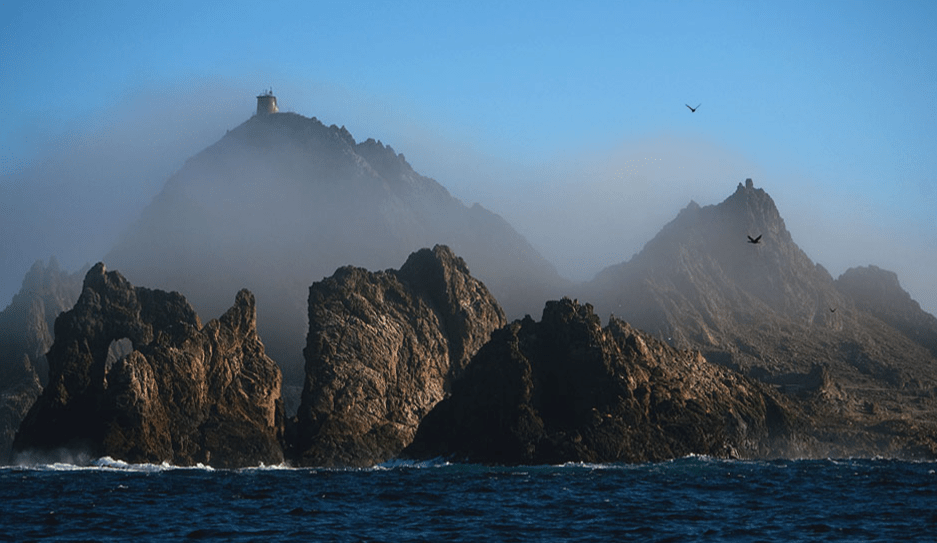
We both loved to read, and after I was grown with a home and family of my own, Dad and I stayed connected through books. Our conversations about them would sometimes be sprinkled with little pieces of his past. One book we both read was The Devil’s Teeth, and he casually mentioned that he used to patrol out there while stationed in San Francisco. The place is actually called the Farallon Islands, about 30 miles off the coast, but they earned the nickname “The Devil’s Teeth” because the rocky islands are dangerous to ships, the waters are rough and foggy, and the area is known for massive great white sharks and sea lions.
Dad. Wow.
We also talked about San Francisco when we read Until I Find You by John Irving. Part of the book centered around a tattoo artist, and my dad mentioned that while he was stationed there, he got a huge tattoo on his arm — an American eagle in flight over a waving U.S. flag. I’d seen that tattoo my entire life, but until then I didn’t know where he got it.
After San Francisco, he spent the rest of his Coast Guard years stationed in the Bering Strait. Yes. THAT Bering Strait. The same icy waters you see on The Deadliest Catch. Again … wow.
Watching those Coast Guard rescues on television years later made me realize that what my dad had done was absolutely not the little fishing-boat scenario I’d imagined as a kid. My dad was kind of a badass.
It’s strange how you see your parents differently at different stages of life. As a child, they’re just your parents. Then one day you realize they were entire people before you ever existed — young and reckless and brave and scared and adventurous. I wish he had stayed around longer so we could’ve shared more books and had more conversations. I have so many more questions about his life now. Questions I never thought to ask back then because I assumed there would always be more time.
I want to know what San Francisco looked like through his eyes in the 1950s. What did it fell like standing on the deck in the freezing dark waters of the Bering Strait? Was he scared during those storms, or did he just learn not to think about it? I want to know if he realized how extraordinary some of those stories were while he was living them, or if to him they were just pieces of a life he quietly moved on from.
But maybe that’s the funny thing about parents. They spend so much time simply being “Mom” or “Dad” that you don’t always notice the full story underneath until much later.
And now when I think about my dad, I don’t just picture the man sitting in his recliner reading a book and smoking his pipe, or mowing the yard, or telling terrible jokes. I picture this young guy from the Midwest who drank his way to Texas, joined the Coast Guard because he had nowhere else to go, survived waves in the middle of the ocean, patrolled around shark-infested islands, and somehow ended up becoming my dad.
That’s pretty incredible. I miss you, Dad. And I wish we could talk about all of it one more time.


